Mon–Fri: 8 AM–10 PM, Sat–Sun: 7 AM–9 PM(509) 452-1015
Premier Yakima Concrete and MasonryPremier Yakima Concrete and Masonry

Brick repair in Yakima WA - fresh joints that leave the old brick in one piece

Mortar crumbling out of your brick joints? We find where water is actually getting in, then repoint with mortar no stronger than what's there.

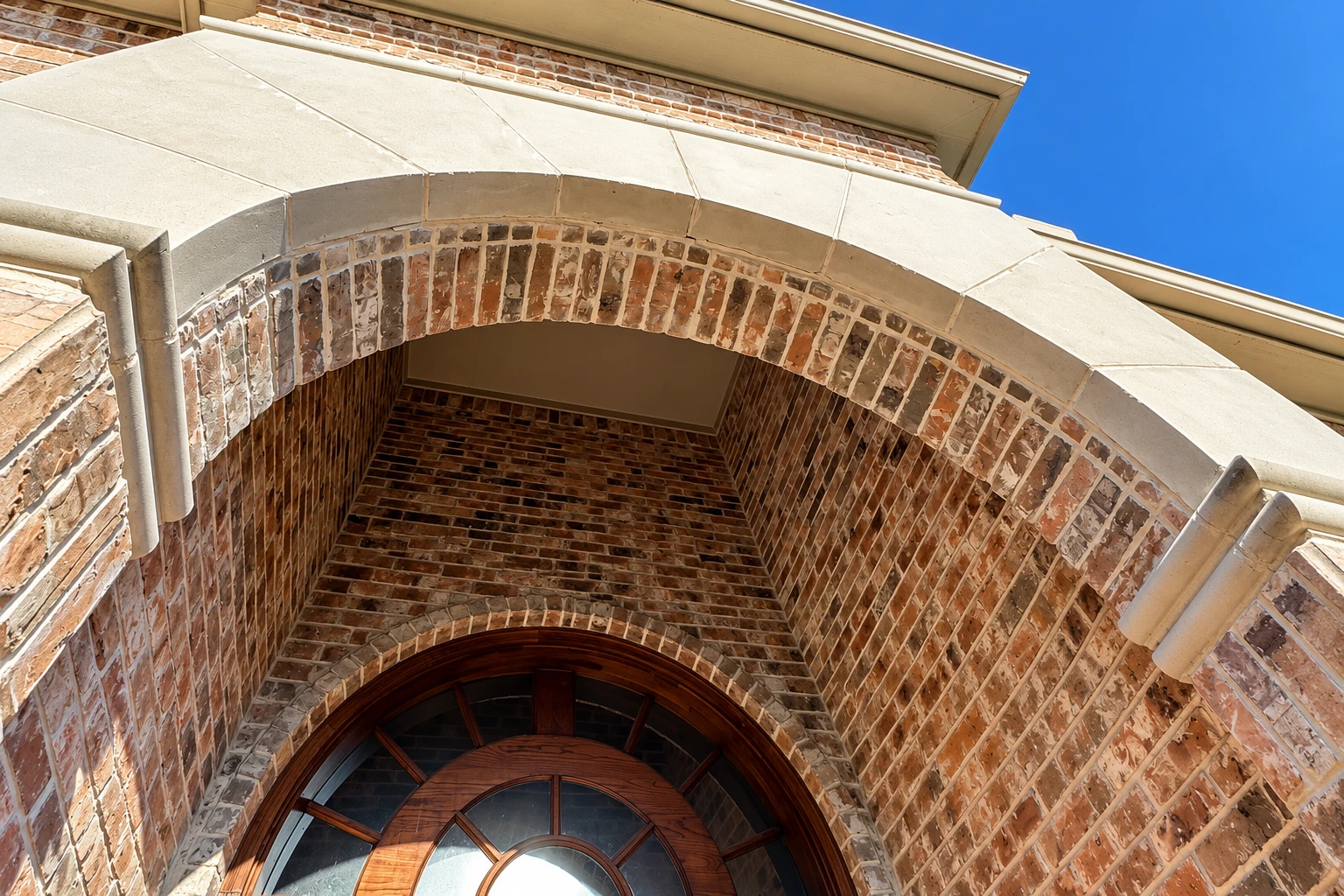
Brick arch with pale stone trim above a wooden entry door, showing weathered mortar joints.

Do the cracks in my brick mortar need fixing now?

Brick repair in Yakima usually means repointing, which some people call tuck pointing. At Premier Yakima Concrete and Masonry, we clean the worn mortar out of the joints between your bricks and fill them with new mortar, so the wall keeps water out again.

Most calls start with something you can see: mortar sanding out of the joints, hairline cracks running along them, or a damp patch inside that wasn't there last year. Some of that needs work and some of it can wait, and I'd rather tell you which it is than sell you a job you don't need.

The price moves with how many joints need raking out, how deep the damage runs, how high the wall goes and how closely the new mortar has to match an older house. The schedule turns mostly on weather, because mortar needs mild days to set right, and on whether your address needs a permit first. Inside the city, permits go through the City of Yakima codes office, and before we start we check with whichever city or county office covers your address and take care of any permit paperwork with you. Your own figure comes from the estimate I give you after looking at the wall.

What happens when you call us about brick repair in Yakima?

You deal with me from the first look to the final walk-around, and our crew does the work in between.

I come out and look at the wall myself

I spent years laying brick and block for a big commercial outfit before I started this business in Yakima in 2023, and I still come out to every job. We look at the wall together, and I tell you what I see and what I'd do about it.

An estimate, or a straight answer that it can wait

If the joints need work, you get an estimate for exactly what I'd do. If the cracks aren't letting water in, I'll tell you to keep an eye on them instead.

The crew does the work, and I walk it with you after

If you go ahead, our crew does the repointing while I stay involved the whole way, and when it's done I walk the finished wall with you. We're fully licensed and insured.

How we handle brick repair

A cracked joint isn't always urgent, so the first thing we do is find out where water is actually getting into the wall before we recommend anything. When the joints do need repointing, we take out only the mortar that's failed, mix new mortar to suit the wall, and keep it from being stronger than the old so the brick doesn't take the damage. Then we pack the joints, finish them to match the rest of the wall and clean up.

Sometimes the water hitting a brick wall starts at the ground beside it, like a driveway that drains toward the house or a slope with nothing holding it back. We also lay driveway pavers and handle retaining wall construction, so if that's part of the problem, I'll tell you.

  • Tracing where water gets in before recommending any repair
  • Raking out worn and cracked mortar joints
  • New mortar matched to the old, never stronger than what's there
  • Joints packed and finished to match the rest of the wall
  • Grit, dust and debris cleaned up when we're done

How the repointing goes, step by step

Repointing is slow, careful work, and most of it is in the prep.

  1. Protect what's below the wall

    We cover plants, windows and walks under the work area, because raking joints throws a lot of grit. It's a small step that saves you a cleanup.

  2. Rake out the bad mortar

    We clear the joints back to sound mortar, working carefully along the brick edges so the faces stay intact. Getting deep enough matters, because new mortar laid over a thin skin of old mortar doesn't hold.

  3. Pack the joints in layers

    We dampen the joints and pack new mortar in thin layers, letting each one firm up before the next. That way the joint fills solid, with no hollow spots for water to sit in.

  4. Finish, clean and let it cure

    We tool each joint to match the shape of the joints around it and brush the brick clean. Then we keep the new mortar from drying too fast so it cures hard.

Get a look at your cracked joints and a straight answer

Send us a few photos of the cracked joints, a note on where you've seen water inside, and whether your house is a designated historic property, or call (509) 452-1015. We get back to you within one business day to set a time, and I come out to look at the wall with you. The estimate is free, done at your property, and there's no obligation to go ahead.

(509) 452-1015

Brick repair questions from Yakima homeowners

Does cracked mortar on my brick house always need to be repaired?

No, not always. Brick built with an air gap behind it, like a cavity wall or brick veneer, can handle the extra moisture that comes through minor cracks, so repair usually makes sense when the cracks outside line up with leaks inside and nothing else explains them. White powder that keeps coming back on the brick is another sign water is getting in and staying, so note where you see either one.

Why does it matter how strong the new mortar is when you repoint brick?

New mortar should be the same strength as the original or weaker, because a harder mix makes the brick give first. That can cause spalling, where the face of the brick breaks off. When nobody knows what the old mortar is, the usual recommendation is to send a sample to a testing lab to learn what's in it and how strong it is.

What's the safest way to remove old mortar from an older brick home?

On historic brick, hand chisels and mash hammers, which are short, heavy hand hammers, take longer but in most cases are the least likely to damage the brick. Power tools in unskilled hands can do real harm, especially to soft brick. If you own an older brick house, ask any crew you're considering how they take the old mortar out.

Who is allowed to do brick repair work in Washington?

A contractor registered with the Washington State Department of Labor & Industries, which requires every construction contractor to register and to be bonded and insured. Registered contractors can do repair work on buildings, and you can look up any company in L&I's Verify a Contractor, Tradesperson, or Business tool before you hire.

Brick, weather and older homes around Yakima

The city rates the weathering here as Severe in its building design criteria, which in plain terms means brick and mortar go through a lot of wet and freezing over a year, and that's hard on joints that have already started to open up. We work out of Yakima and take jobs in the cities around it, including Selah, Terrace Heights, Union Gap, Toppenish, Sunnyside, Grandview and Ellensburg, and if you don't see your city here, call and ask.

If your house is a designated historic property, the city reviews and approves changes to the outside of the building. Talk to the city's Historic Preservation Program first, since owners apply for a Certificate of Appropriateness when they plan a change, and we'd rather have that settled before our crew touches the wall.

Find out if your brick can wait

Call (509) 452-1015 or send the form, and you'll know whether those cracks need work now or just a watchful eye for another season.

If you're not sure your mortar needs work yet, call and ask, and I'll give you a straight answer.

Tell us about your project
(509) 452-1015Get an estimate